











 STRIPES
 MOROCCAN
 CHECKS
 MID-CENTURY
 NEUTRAL
 GEOMETRIC
 SOLID
SOLID BORDERS
 KIDS
KIDS OUTDOOR
 ANIMAL PRINTS
Wool rugs are beautiful, but they're also lived on. Traditionally, there's been tension between wool's finery and the realities of daily life. Wool's depth and tactile richness make it one of the most desirable materials, but traditional wool carpets have generally needed specialist cleaning and careful handling.
Double’s rugs aren't precious. By bringing washability to New Zealand wool, we’ve made a material once treated as delicate easier to own. Fine cut piles, flatweaves, Berber textures, sheepskin, and heavier looped constructions can live in homes with children, pets, dinner parties and the ordinary accidents that come with them.
Wool still changes with use. The pile settles, hand-knotted yarn becomes softer, and early shedding gradually eases. This guide explains how to care for those natural characteristics: everyday care and spills, drying and the textural changes that happen over time.
Key Takeaways
- Deal with a spill immediately. Blot stains with a clean cloth or white paper towels to absorb as much liquid as possible.
- Never rub a stain, as it pushes it deeper into the wool pile.
- For pet stains, use a small amount of pH-neutral, wool-safe cleaning solution. Test it in an inconspicuous area first and stop if you notice colour bleeding.
- Vacuum with a soft brush or non-rotary attachment on low suction, with light pressure. Pay attention to busy walkways, especially in the first few months of owning the rug.
- For deep cleaning, and if the care label permits, use cold water and a delicate cycle if the rug fits comfortably inside the machine. Don't soak the rug or use excessive water.
- Lay the rug flat to air-dry away from direct heat and sunlight. Don't put it back on the floor while the backing is still damp, as trapped moisture can lead to musty odours or mould growth.
- With proper care and regular maintenance, routine professional cleaning shouldn't be necessary for our washable wool rugs.

Double Makes Wool More Practical
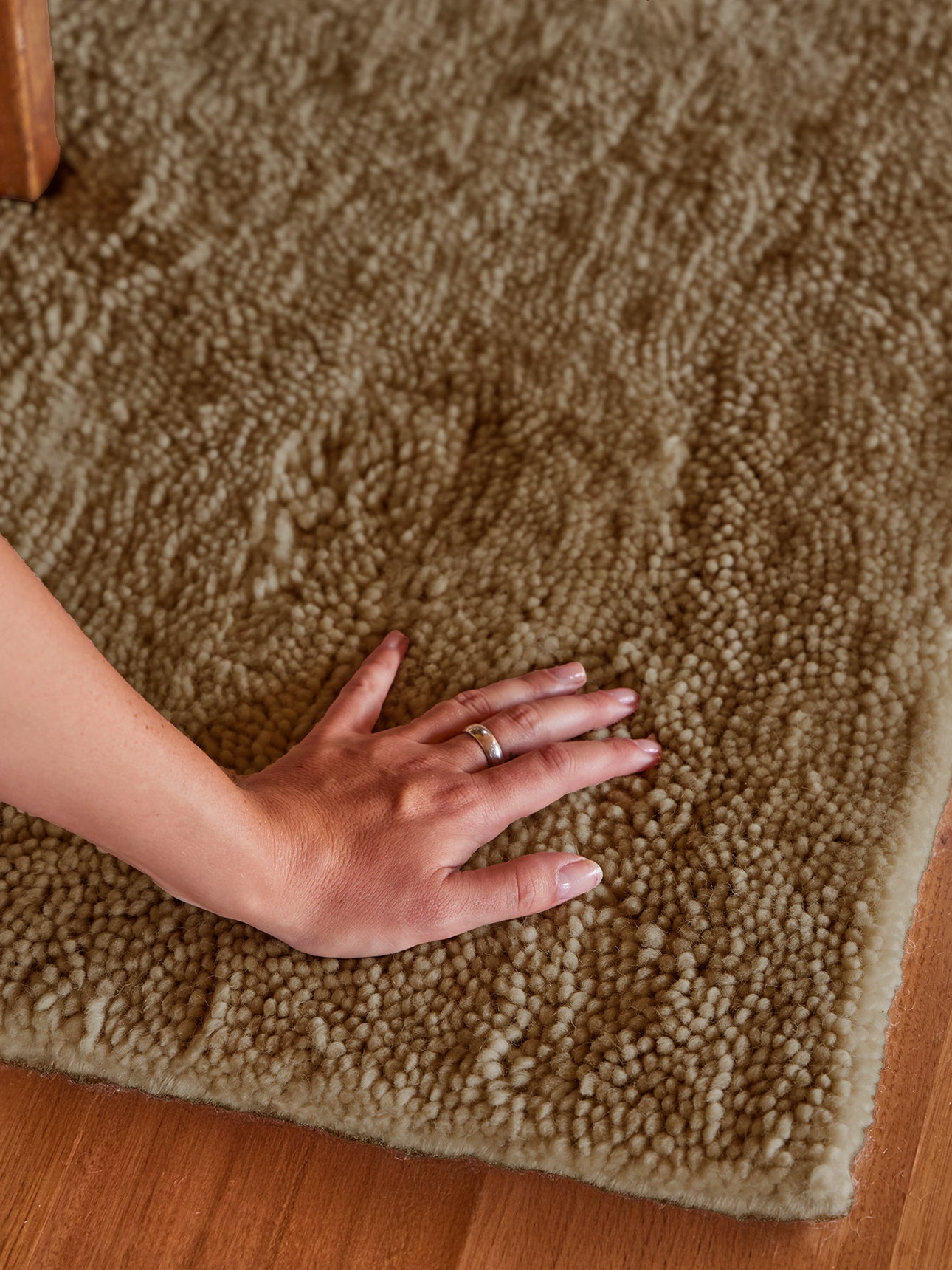
Our New Zealand wool rugs retain the qualities people come to wool for, including warmth and texture.
| Traditional Wool Rug Concerns | The Double Difference |
| Professional cleaning after larger spills | Suitable sizes can be washed in a domestic or commercial machine, depending on the rug and appliance capacity. |
| Careful placement away from pets, children and dining areas | Washability means wool rugs can be used in rooms where spills and muddy shoes are expected. |
| Natural shedding during the settling period | We apply an anti-shed treatment to hold many loose fibres to the backing, although a small amount remains normal. |
| A rigid, difficult-to-move construction | We use flexible backing so the rug is easier to lift and reposition for cleaning than many traditionally backed wool rugs. |
| Uncertainty about how the surface will respond to washing | We put each texture through independent wash testing with Eurofins before we release it, giving the care guidance a product-specific basis. |

What to Know Before Cleaning a New Zealand Wool Rug
New Zealand wool is naturally textured and resistant to many everyday stains. It also helps regulate temperature, allowing the surface to remain comfortable as the seasons change.
Our washable rugs also include several different surfaces and constructions. A fine cut pile rug won’t respond to handling in the same way as a heavy loop, sheepskin or a hand-knotted rug. Our New Zealand Washable Wool Care Guide outlines how our rugs should be looked after.
Before cleaning, check:
- The rug’s size
- Its pile and construction
- The extent of the stain or soiling
- Whether there are existing pulled threads, worn edges or damaged areas
- The capacity of the washing machine, if a full wash is needed
Smaller New Zealand wool rugs usually fit in a domestic washing machine with enough drum space. Larger sizes need a commercial machine, while you can clean oversized rugs through vacuuming and spot-treating individual marks.
The machine door isn't the only way to test the fit. A rug might pass through the opening and still sit too tightly inside the drum. It needs enough room for water and detergent to move through the pile.
For more details, read our guide on whether you can wash a rug in a washing machine.
How to Vacuum a Wool Rug Gently
Vacuuming removes dust, crumbs, and loose dirt before they settle more deeply into the pile. It also manages the fibres that come to the surface during the first few months.
Check the attachment and suction level before you start. Aggressive vacuuming puts stress on the wool fibres, particularly around borders, edges, and raised loops.
Use Low Suction
Choose a soft-bristle brush or a non-rotary attachment and keep the suction low.
Don't use:
- Stiff bristles
- Rotating brush heads or beater bars
- High suction
- Heavy downward pressure
- Repeated passes over one small area
Use light pressure across the surface rather than pressing the vacuum into the pile.
Follow the Traffic Through the Room
Runner rugs between the front door and kitchen gather more grit than the far corner of a bedroom. The area in front of a sofa collects crumbs, pet hair and the marks left by feet. Under a dining table, dry food often settles between the fibres before it becomes obvious from above. During the first few months, more frequent gentle vacuuming helps collect material released as the pile settles.
Rotate the Rug Occasionally
Turn the rug from time to time so the same edge doesn't always face the brightest window or busiest path.
Rotation evens out sunlight and furniture pressure across the surface. It won't prevent every indentation, but it stops one section from getting compressed all the time.

How to Spot Clean a Wool Rug
If you have a small mark, you shouldn't need to clean the entire rug. Act while the spill is still close to the surface and only treat the affected area.
Step 1: Remove Solid Material
Lift food, soil, or another solid substance with a spoon or dull knife.
Don't press it down into the wool. Work from the outside of the mark towards the centre so it doesn't spread.
Let the wet mud dry before you loosen and vacuum it. If you add more water while there's still debris on the surface, it can turn a small mark into a larger one.
Step 2: Blot the Spill
Use a damp, clean cloth to gently blot the stain.
Press down on the stain and then lift the cloth. Rotate the cloth so that each time you press down, you're using a clean section of the cloth. Repeat until there's hardly any moisture left to transfer.
For a new liquid spill, you can use clean white paper towels to remove moisture during the first pass. Replace them as they become saturated.
Don't rub. Friction pushes liquid deeper into the pile, changes the direction of the wool fibres and makes the stained area wider.
Step 3: Treat What Remains
Put a small amount of clear, pH-neutral, wool-safe detergent on a damp cloth.
Test the solution on a hidden section first. If colour transfers to the cloth or the surface changes, stop.
Continue blotting until the mark lifts. Don't pour the product directly onto the rug or saturate the pile.
Don't use harsh chemicals, including:
- Bleach
- Vinegar
- Citrus-based detergent
- Fabric softener
- Strong general-purpose cleaning solution
You'll probably see white vinegar and homemade mixtures in general rug-cleaning advice. They aren't part of our New Zealand Wool care instructions. It's always best to check the care guide for the rug you have rather than relying on advice from the internet.
Step 4: Remove the Excess Moisture
Press a clean, dry towel against the treated section.
Leave it open to circulating air and keep furniture off until the pile and backing are dry. Covering the area or putting the furniture back too soon slows evaporation.
Pet stains need a closer check. If liquid has reached the backing or floor below, cleaning only the visible surface will not remove the source of the odour.
How to Clean a Wool Rug in a Washing Machine
A full wash is useful when dirt extends beyond one small area, and the rug fits within the recommended machine capacity.
| Step | What to Do | Why It Matters |
| 1. Check the rug and machine size | Place the dry rug loosely inside the drum. Don't force it in or compress it. | Wool gets a lot heavier when it's wet. An overloaded machine won't wash or rinse it evenly. |
| 2. Treat visible marks first | Clear any solid food debris or mud, and remove pet stains before starting the cycle. | A delicate wash refreshes the rug surface but won't always lift a stubborn mark on its own. |
| 3. Select cold and delicate | Use cold water and a delicate cycle. Avoid intensive spinning. | Heat and excessive agitation increase the risk of shrinkage, compression and matting. |
| 4. Measure the detergent | Add a small amount of clear, pH-neutral, wool-safe detergent. Don't add bleach or fabric softener. | If you use too much cleaning solution, it can stay in the pile and make rinsing more difficult. |
| 5. Lift with support | Support the rug across a large area after you take it out of the machine. Don't wring, twist or pull from one corner. | A wet wool rug carries substantial weight, which places strain on a small area if lifted unevenly. |
Expect Some Natural Shrinkage
Natural fibres move when you clean them. Shrinkage of up to approximately 5% may occur, even when you follow the correct method. Keep this in mind if the rug needs to fit beneath furniture or within a closely measured section of flooring.
Fibres in the Machine Are Normal
After the first few washes, you might notice wool fibres in the drum or filter.
Remove them according to the manufacturer’s instructions. Don't take it as a sign to clean the rug again or use a stronger cycle. It won't stop the shedding faster.

How to Air-Dry a Wool Rug
The best drying process for wool rugs is air drying. Lay the rug flat in a well-ventilated area, away from direct sunlight and high heat.
Drying can take between 12 and 36 hours. A light flatweave in a breezy room will dry more quickly than a deeper pile on a humid day.
Support the Weight of the Rug
A wet wool rug is heavier than it appears.
Don't wring it, fold it tightly or hang the full weight from one edge. Support it evenly when you move it, then it will settle flat as the water evaporates.
Avoid Direct Sun and Heat
Don't place the rug next to a heater or on a hot outdoor surface.
Strong heat affects natural fibres, while direct sunlight exposes one section to more warmth and light than another. Open the windows or use a fan to keep air moving through the room.
Check the Backing
The pile usually dries faster than the backing.
Run your hand over the centre, corners and underside. Don't put the rug back on timber, tile, or carpet until every part is dry.
Use a Steamer for Packing Creases
A hand-held steamer can relax creases left by packing or drying.
Hold it above the surface; don't press it directly into the pile. This isn't the same as steam cleaning or hot-water extraction. It's to help the fibres settle.
Shedding During the First Few Months
All natural wool rugs shed. It's usually most noticeable during the first four months, and then it reduces to a lower level. This doesn't affect the rug’s durability or feel.
You might notice fibres:
- Along the edges
- Against dark timber or tiles
- Under furniture
- On clothing after sitting on the rug
- Inside the vacuum cleaner or washing machine
Double’s anti-shed treatment holds many fibres to the backing, but it doesn't turn wool into a no-shed material.
Vacuum gently and use a lint roller between cleans where needed. Do not tug at strands that remain connected to the pile.
If you don't want any shedding at all, our recycled polyester collection may be a better fit.
Hand-Knotted Wool Softens
Hand-knotted wool develops character as you wash it. The yarn opens, giving the pile a fuller and more relaxed appearance. Minor fibre or thread breakage can also occur as the rug ages.
Will You Need Professional Cleaning?
Traditional wool rugs often come with the expectation of specialist cleaning and the inconvenience it brings: arranging collection, waiting for the rug to return and paying for the service each time.
Double developed its New Zealand Washable Wool range to remove that routine dependency. Smaller rugs generally suit a domestic washing machine, while larger rugs may need a commercial-capacity machine. Oversized rugs should be maintained through gentle vacuuming and prompt treatment of individual marks.
For the dropped glass, muddy footprint, or food beneath the dining chair, the rug stays at home.
Routine professional cleaning should not be necessary when you follow the care instructions. Extensive structural damage, mould within the backing or contamination beyond an ordinary household spill may still need specialist assessment.
Frequently Asked Questions
What Happens if the Rug Is Too Big for the Machine?
Don't force it into the drum. Use a commercial machine with a bigger capacity or follow the product-specific guidance.
Can You Use White Vinegar on a Wool Rug?
A white vinegar solution isn't part of our New Zealand Wool care instructions. Use the approved wool-safe method and not an untested household formula.
Will a Washable Wool Rug Shrink?
A small amount of shrinkage is normal. The dimensions might be reduced by up to approximately 5%, even when you wash the rug correctly.
Can You Steam Clean a Wool Rug?
A hand-held steamer can relax packing creases, but this is different from professional steam cleaning or hot-water extraction. Follow the care guide.
Do I Need to Get a Wool Rug Professionally Cleaned Every Year?
Not when you own a Double wool rug and follow its care instructions. We developed the collection so that household cleaning doesn't depend on an annual professional service.
Conclusion
Always start with the least intensive method when cleaning a New Zealand wool rug. Absorb spills quickly, vacuum without pulling at the pile, and only do a full wash for dirt that extends beyond one small area. When the rug fits the machine, cold water and a delicate cycle do the work.
Wool sheds at first, softens with use and moves slightly when washed. These qualities are part of the material rather than problems to scrub away.
If a rug has extensive damage that cleaning can't resolve or the room is ready for a different size or texture, browse our collection of New Zealand wool rugs, including Cut Pile, Berber, Knotted, Sheepskin, Wool Flatweave, and more textured finishes.

