










 STRIPES
 MOROCCAN
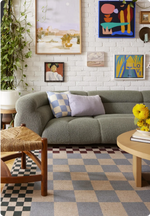 CHECKS
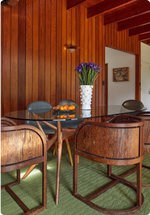 MID-CENTURY
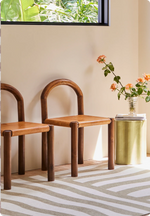 NEUTRAL
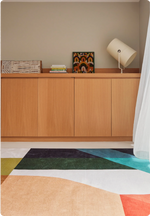 GEOMETRIC
 SOLID
SOLID BORDERS
 KIDS
KIDS OUTDOOR
 ANIMAL PRINTS

Wool rugs are most often defined by pile. The fibres sit above the backing to create softness, texture and depth across the surface of the rug.
Flatweave introduces a different expression of wool. Woven rather than tufted or looped, the construction sits low and even against the floor, placing less emphasis on pile and more on the woven surface itself.
A woven surface
The distinction lies in where the wool sits within the construction. In a piled rug, the fibre rises above the backing to create softness and depth. In flatweave, the wool is worked directly into the structure of the rug itself, handwoven across a cotton warp into a continuous surface where pattern and construction are inseparable.
The warmth of wool remains, carried in a low-profile, washable construction.

Pattern in the structure
The wool flatweave rug gives pattern a different kind of clarity.
Because the design sits within the weave itself, graphic and geometric forms hold their shape with greater precision across the floor. The construction allows pattern to remain clear and consistent without relying on pile to create contrast or definition.
Across eight designs, the collection moves between graphic layouts, abstract forms and structured motifs, each approaching pattern through a different visual language.

A different role in the room
Flatweave introduces less volume into a room.
Furniture settles closer to the floor and the rug becomes part of the composition rather than another layer within it. In rooms already rich in material, colour or collected objects, that restraint is often enough to change the balance of a space.

With Wool Flatweave, Double Studio introduces a new texture in natural fibre. A different construction for a material more often defined by pile.

